Bedding • Fabric Guide
Why Percale Sheets Feel Crisp: Weave, Weight, and Care
That cool, clean sensation of percale is more than a matter of thread count. The weave creates its signature character, but fiber, fabric weight, finishing and even laundry habits help determine whether a sheet feels airy and crisp—or dense and firm.
Percale has a particular kind of polish: matte rather than glossy, cool to the touch, and satisfyingly smooth without feeling slippery. It is often described as crisp, a word that can suggest a freshly pressed shirt or a hotel bed turned down with exacting care. Yet percale is not a fiber, a finish or a guarantee of one precise hand-feel. It is a plain-weave construction, and the character of the finished cloth depends on the yarns and choices that come together around it.
Understanding those details makes it easier to choose sheets that suit both your preferences and your sleeping environment. Cotton percale can be featherlight or substantial, newly laundered or softly relaxed. Two sets may share the word “percale” on the label and still feel noticeably different. The distinction begins with the structure of the weave, then moves through fiber quality, yarn, weight and finishing—all the way to the way you wash and dry the fabric at home.
Percale is a weave, not a fiber
In a plain weave, each lengthwise yarn—called a warp yarn—passes over and under successive crosswise yarns, known as weft. The interlacing repeats in a simple, orderly pattern. This close, balanced construction gives percale its characteristic even surface and helps explain its clean, matte appearance. Unlike a satin weave, which places more yarns on the surface to create luster, plain weave presents a more uniform pattern of interlacings.
The term percale is commonly associated with cotton bedding, but it describes how a fabric is woven, not what it is made from. Cotton is the familiar choice for sheets because it can be spun into yarns with a wide range of qualities and woven into cloth that is breathable, washable and comfortable against the skin. The precise result depends on the fiber and yarn as much as the weave itself.
That distinction matters when comparing labels. “Cotton percale” tells you both the fiber and construction. “Percale” alone identifies the weave but leaves the fiber unspecified. Looking for clear information about composition, finish and care gives a more complete picture than relying on a single fabric term.
The crispness is built into the structure
Percale’s many points of contact between warp and weft create a compact, stable cloth. That structure can lend the fabric a dry, crisp hand and a surface that feels smooth rather than plush. Because the weave does not create the same pronounced sheen as sateen, its appearance tends to remain softly matte. For many sleepers, the effect feels fresh and uncomplicated: a sheet that is present, but not glossy or heavy.
The word “crisp” is sometimes mistaken for “stiff.” A good percale sheet need not feel rigid. New fabric may initially have more body, particularly if it has received a finishing treatment, but laundering and regular use typically soften the hand. The goal is not to preserve a paper-like finish; it is to maintain the fabric’s breathable, even character while letting it become more comfortable over time.
Construction is only one part of the sensation. The yarn’s fineness, the density of the fabric and any finishing applied after weaving all influence how it drapes. Even the way a sheet is dried can change its immediate feel. Percale is therefore best understood as a useful starting point, not a complete description of the experience.
Fiber quality and yarn make a difference
Cotton is not a single, uniform material. Cotton fibers vary in length and quality, and those characteristics affect the yarn spun from them. Longer fibers can be spun into smoother, more even yarns, which may contribute to a refined surface and help the fabric resist fuzzing when cared for appropriately. Shorter fibers can produce a different texture and may be more prone to loose fibers at the surface.
Fiber descriptions are helpful, but they are not a shortcut to judging comfort in isolation. A sheet’s feel emerges from the finished fabric: the yarn, weave, density, treatment and construction working together. A longer-staple cotton percale may feel smooth and substantial, while a lighter percale may feel more open and airy. Neither is automatically the right choice for every bed.
Yarn also affects the balance between crispness and softness. A finer, more even yarn can yield a smooth fabric with a light hand; a thicker yarn or denser construction can give the cloth more body. If you are choosing remotely, look for material details, fabric weight where provided, and care instructions. If you can handle the fabric in person, notice whether it feels cool and dry, soft and supple, or firm and structured—and decide which quality you prefer.
Fabric weight: airy or substantial?
Fabric weight offers another clue to how sheets may feel. It is often expressed in grams per square metre or ounces per square yard, although not every bedding description includes it. Weight is not a direct measure of quality. It helps describe how much material is present in a given area, but the feel still depends on the fiber, weave and finishing.
A lighter percale may feel especially airy, with a relaxed drape and a quick, cool sensation against the skin. A heavier cloth may feel more grounded and durable in the hand, with a crispness that reads as tailored rather than delicate. Some people prefer the lightest possible layer, especially in warm bedrooms or when they tend to sleep hot. Others enjoy a sheet with enough body to stay neatly in place and feel substantial under a coverlet.
Weight can also influence the way a bed looks. A lighter fabric tends to fall softly and move easily, while a denser one may form a sharper edge when tucked or folded. Neither quality is inherently more luxurious. Consider the climate, your preferred bedding layers and whether you like a relaxed, fluid bed or a smoother, more structured finish.
Thread count can offer context, but it should not be treated as a universal ranking system. It counts threads within a measured area and can be affected by yarn choices and how a manufacturer reports the figure. A very high number does not, by itself, establish that a sheet is more breathable, more durable or more comfortable. For percale, construction quality, fiber information and fabric weight often tell a more useful story when considered together.
Percale and sateen: two different moods
Percale and sateen are both common cotton sheet constructions, but they create distinct surfaces. Percale uses a plain, balanced weave that gives it a matte finish and a crisp, cool hand. Sateen uses a weave structure that brings more yarn to the surface, creating a smoother feel and a gentle sheen. It tends to drape with a more fluid, silky character.
The choice is less about which is better and more about which feels right. Percale may appeal if you like a fresh, dry touch, a cleanly tailored appearance and sheets that feel light against the skin. Sateen may suit you if you prefer a smoother, more enveloping sensation and a subtle glow. Bedroom temperature, personal warmth and the rest of your bedding layers can all shape the decision.
- Choose percale if you are drawn to a matte surface, an airy feel and a crisp, relaxed finish.
- Choose sateen if you prefer a smoother glide, a softer drape and a more luminous appearance.
- Compare beyond weave by checking fiber content, fabric weight, finishing and washing instructions.
Neither weave guarantees a particular temperature experience. A sleeper’s comfort depends on more than the sheet alone: room conditions, mattress materials, duvet warmth, sleepwear and individual preferences all play a part. Percale’s open-feeling, matte surface is often associated with a cool sensation, but it is more accurate to think of it as one layer in a broader sleep environment.
How washing changes the hand-feel
The first night on new sheets can feel different from the tenth. Finishing treatments applied during manufacturing may make fabric feel especially smooth or crisp at first. Washing removes residues and begins the gradual process of softening the fibers. With use, a well-made cotton percale often becomes more supple while retaining its characteristic structure.
That change is usually part of the appeal. Rather than chasing an untouched, showroom finish, many people enjoy how the fabric settles into a softer version of itself. The precise pace depends on the cotton, construction, finish and laundry routine. Gentle, consistent care helps the cloth wear evenly and maintain its useful character.
Follow the care label first, since recommended washing temperatures and drying methods vary. In general, avoid overloading the machine: sheets need room to move so that detergent can rinse away and the fabric is not subjected to unnecessary friction. Use an appropriate amount of detergent, and avoid harsh bleach unless the label specifically permits it. Excess detergent or incomplete rinsing can leave residue that makes fabric feel less fresh.
Fabric softener is not always helpful. Some manufacturers advise against it because coatings can build up on fibers and affect absorbency or the natural feel of the cloth. If the care instructions say not to use softener, take that guidance seriously. A well-rinsed wash and sensible drying routine are usually better ways to keep sheets pleasant to touch.
A considered care routine for percale
Good care is less about elaborate rituals than avoiding extremes. Cotton percale is made for regular use, but repeated high heat, harsh chemicals and rough handling can weaken fibers over time. A measured routine can preserve the smooth, breathable character that makes the fabric appealing.
- Read the label. The maker’s instructions take priority over general advice, especially for embellished or specially finished bedding.
- Wash with similar items. Keeping sheets with lightweight bedding can reduce friction from heavier garments, zippers and hardware.
- Use a suitable detergent. More product is not necessarily better; follow the detergent directions and avoid unnecessary additives.
- Choose moderate drying. Low or moderate heat, when permitted, can help limit excessive shrinkage and stress on cotton fibers.
- Remove promptly. Taking sheets out of the dryer while slightly warm can reduce deep creasing. Smooth them by hand or fold them once cool.
- Skip over-drying. Leaving cotton under high heat for too long can make it feel dry and brittle and may shorten its useful life.
Wrinkles are not a flaw in percale. The plain weave can crease, particularly when the sheet is left tightly compressed after washing. If a smoother appearance matters, remove the sheets promptly, fold or make the bed while they are still a little warm, or use an iron according to the care label. A slightly rumpled finish, however, is entirely compatible with the fabric’s understated, relaxed appeal.
What to look for when choosing sheets
Begin with the experience you want, rather than a specification in isolation. If you like the fresh feel of a hotel bed, a crisp cotton percale with a matte surface may be a natural fit. If you want something airy for a warm room, look for a lighter fabric and breathable construction. If you prefer a sheet with more presence, a weightier percale may feel more reassuring and tailored.
Check the practical details as carefully as the fabric description. Confirm the mattress dimensions and fitted-sheet pocket depth, particularly if you use a thick mattress topper. Look at the size of the flat sheet and pillowcases, the set contents, the origin information if relevant to you, and whether the care routine fits your household. A beautiful fabric that is difficult to maintain in your circumstances may not be the most satisfying choice.
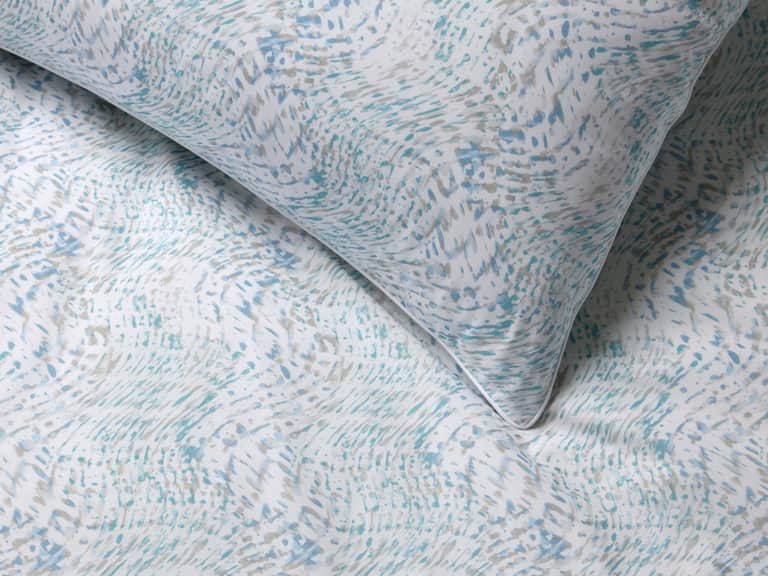
For a concrete comparison of fabric character, the Meloria Sham is described as printed percale made from 100% long-staple cotton, with a crisp, cool hand and a breathable feel. Its Italian-woven construction and piped knife edge demonstrate how weave and finishing details can coexist: the percale supplies a clean, even surface, while the tailored edge gives the sham a more defined outline.
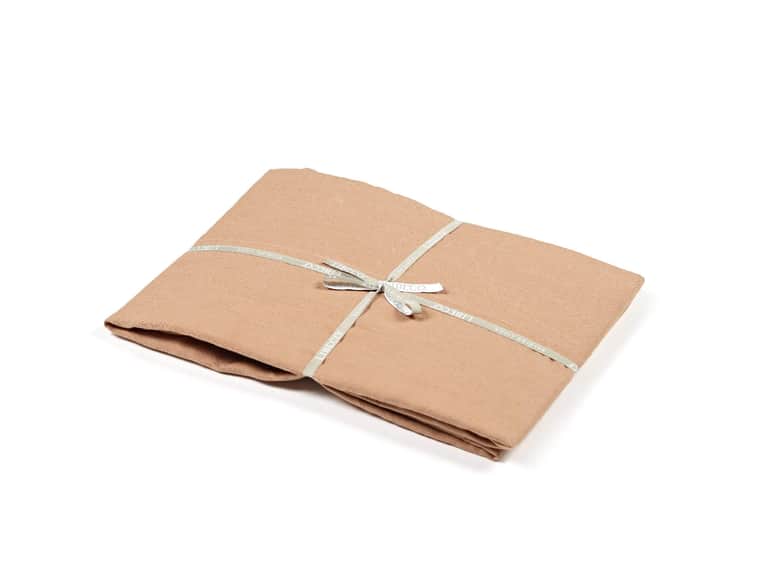
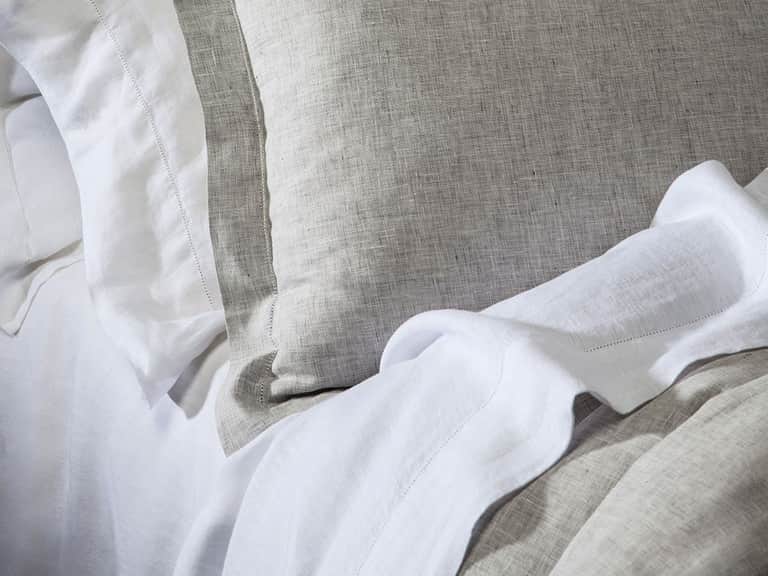
For a different fiber and construction, the Madison Flatsheet is made from 100% linen with a washed finish. It is not percale, but it offers a useful contrast when considering how fiber and weave shape bedding. Linen’s relaxed drape and distinctive texture differ from cotton percale’s crisp, matte surface; the right choice depends on whether you prefer a clean, orderly hand or a more tactile, lived-in one.
A simple test for your own preferences
Think about the sheets you already enjoy. Do you reach for a cool, smooth shirt or a soft, brushed layer? Do you like the bed neatly tucked and sharply made, or do you prefer a looser, more natural drape? These small preferences can be more revealing than a long list of technical specifications.
If possible, touch fabric samples before deciding. Notice the first impression, then gently gather the cloth in your hand. Does it spring back with a clean structure? Does it fall softly? Is the surface matte, silky or textured? Consider how that feeling might change after washing, because new bedding can soften and relax with regular care.
When comparing online, read descriptions as a whole. Fiber content explains what the cloth is made from; weave explains its construction; weight gives a sense of density; and care instructions hint at the practical life of the fabric. No single detail should carry the entire decision. The most satisfying sheet is the one whose combination of qualities feels right for your body, your bedroom and your routine.
The enduring appeal of a crisp bed
Percale has longevity because its appeal is quiet and practical. It offers a clear, matte surface that layers easily with quilts, duvets and blankets; a crisp hand that can soften with use; and a construction familiar enough for everyday bedding. Its character is neither glossy nor overly plush. Instead, it brings a sense of freshness to the bed without demanding a complicated styling approach.
That freshness is not a promise that every percale sheet will feel identical. Fiber quality, yarn, weight, finishing and care all matter. A fine, light cotton percale can feel very different from a dense, weighty one, just as a new sheet may differ from one that has been washed many times. Thinking of percale as a framework—not a finished verdict—makes it easier to understand what you are buying.
Ultimately, crispness is a balance: enough structure to feel clean and composed, enough softness to invite rest. Choose by touch where possible, read the specifications with discernment, and let the care label guide the laundry routine. When weave, weight and daily habits are in harmony, percale becomes less a technical term than a small, dependable pleasure at the end of the day.
Quick answers
Does percale always mean cotton?
No. Percale describes a plain-weave construction, not a fiber. Cotton percale is common in bedding, so check the composition label rather than assuming the fiber from the weave name alone.
Will percale soften after washing?
It often becomes more supple with regular use and washing. The degree of change depends on the fiber, fabric construction and finishing, so follow the care instructions supplied with the sheets.
Is percale cooler than sateen?
Percale is commonly associated with a crisp, cool sensation, while sateen tends to feel smoother and more fluid. Actual comfort depends on the fabric’s weight and fiber, as well as your room, bedding layers and personal preferences.
Does a higher thread count mean better percale?
Not necessarily. Thread count is only one specification and does not independently determine softness, breathability or durability. Fiber, yarn, construction, finishing and care all contribute to performance.
A well-chosen sheet does not need to announce itself. With percale, the pleasure is in the small details: a matte surface, a fresh touch, a fabric that relaxes without losing its composure. Understand the weave, consider the weight, and care for the cloth gently—and crispness becomes a lasting part of the everyday.